






Risk Management: From Control to ‘Care’, the Paléo Model
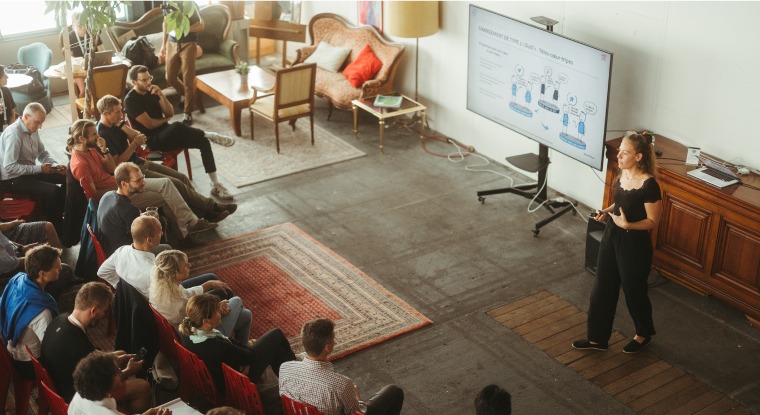
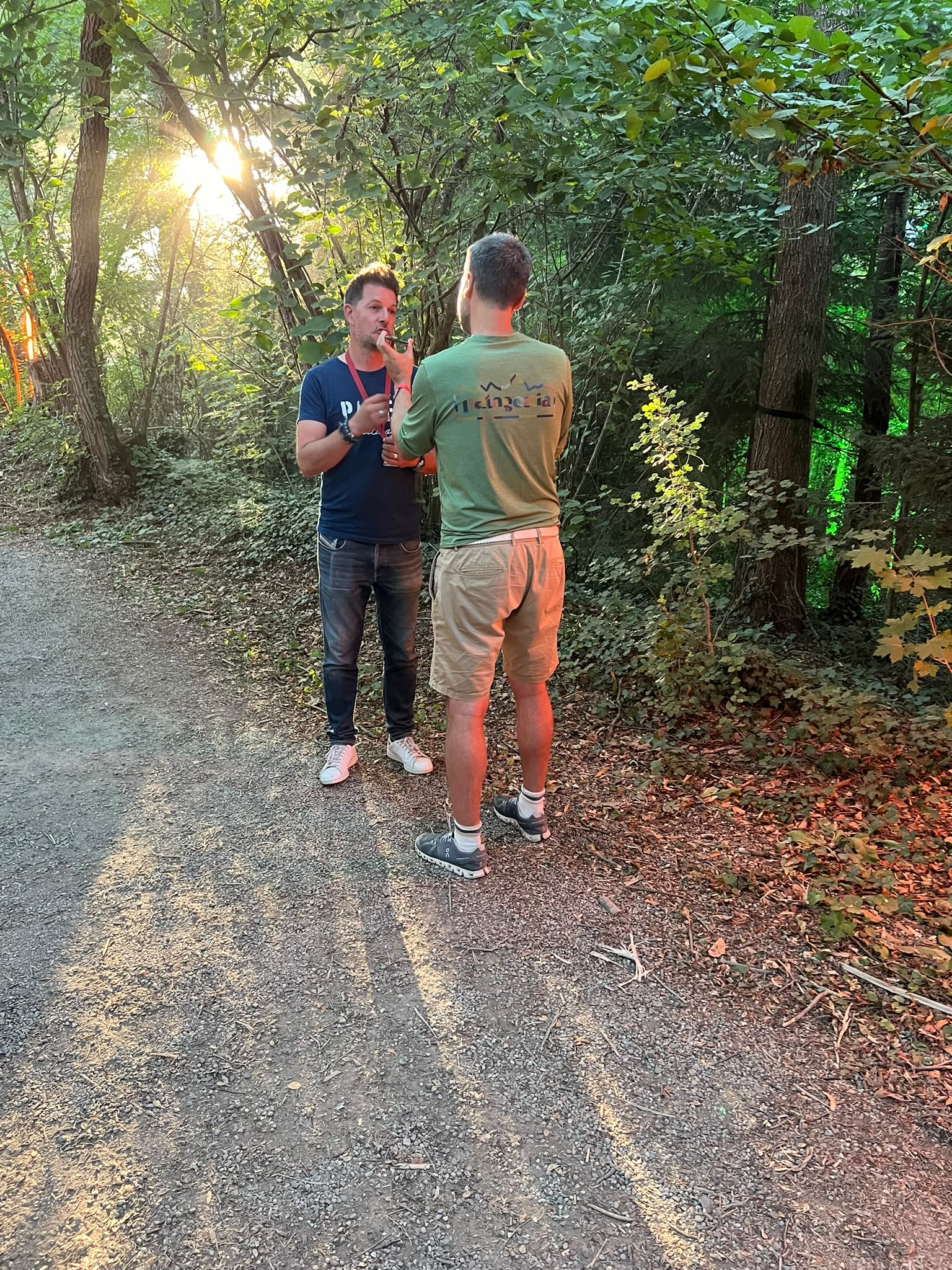
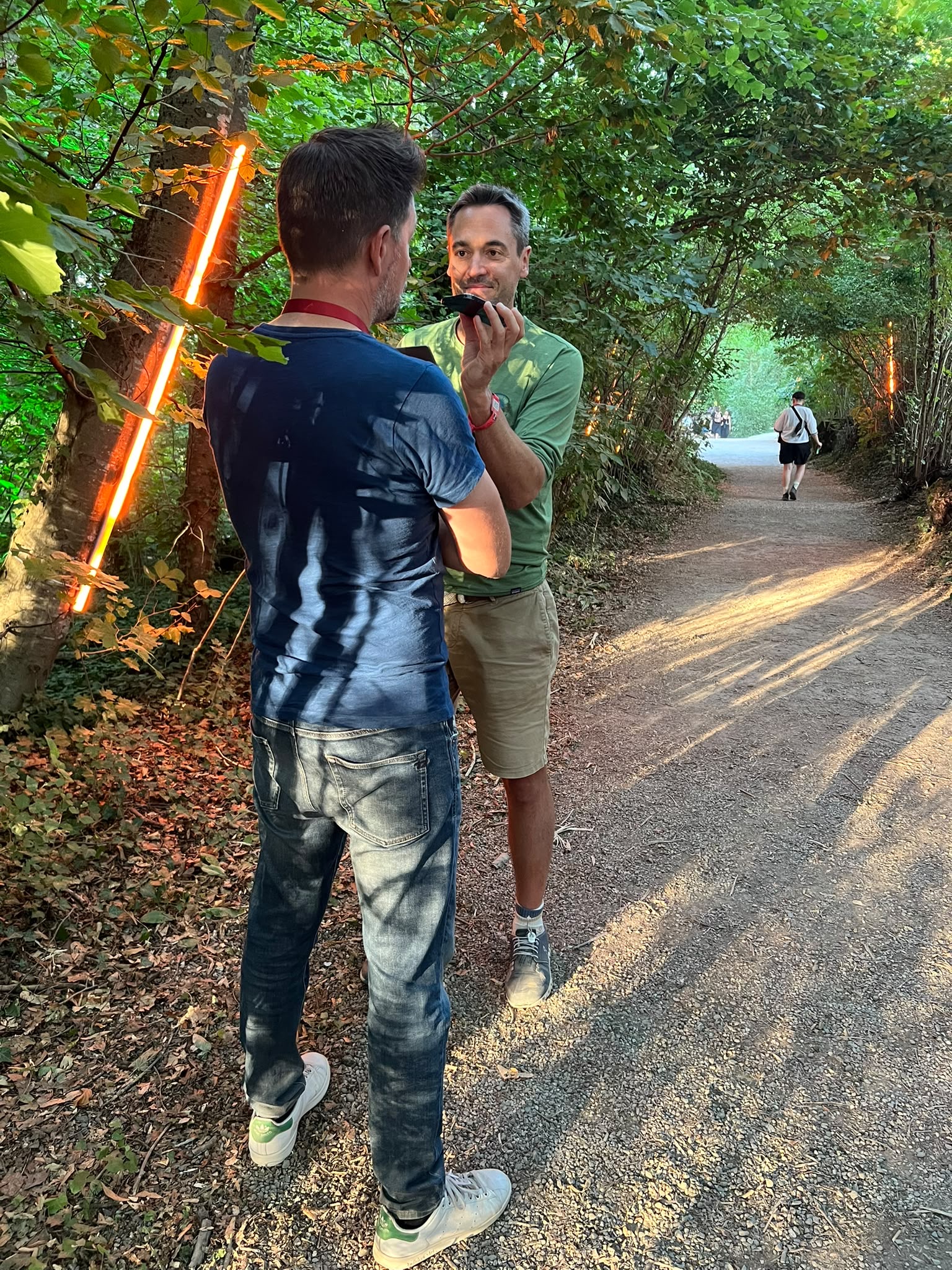
12 years ago, our co-founder, Christophe Barman, met with Pascal Viot, then in charge of risk management for the Paléo Festival, to understand how to ensure the safety of such a large-scale event. A few days ago, he met him again to assess the progress made, discuss the evolution of the profession, and address the challenges encountered over all these years. He takes you along!
July 23, 2026, 8:00 PM. Twelve years almost to the day after our last meeting, my steps lead me back between the Ferme bar and the Canal bar, nestled behind the Main Stage. The setting seems immutable, yet the world has changed. In 2014, I wondered about the miracle of risk management within this ‘happiness factory’ that is Paléo, then the fourth-largest city in French-speaking Switzerland for a week. Today, as the festival prepares to celebrate its 50th anniversary, I meet Pascal Viot again to measure the progress made.
The man has lost none of his geniality or empathy, a value he champions as a pillar of safety, but the Paléo’s ‘Mr. Risk Management,’ a sociologist by training, has seen his profession evolve under the pressure of an increasingly complex world.
The era of ‘non-conventional’ risks
While in 2014, weather and pogo management were the main concerns, the last decade has brought challenges of a different order. Pascal Viot mentions the emergence of ‘non-conventional’ risks that defy traditional probability calculations: “If we look at the last ten years, we’ve gone through terrorist risk, Covid risk, the pandemic, and the prioritization of gender-based and sexual violence.”
These crises have forced the festival to operate as a societal laboratory. Faced with terrorism, for example, the boundary between the inside (the festival) and the outside (public space) has shattered. “The risk is between the two… the most dangerous zone is before the checkpoints.”
To address this, Paléo had to invent unprecedented interoperability with the police, while maintaining a calm approach to avoid paranoia: “The trees we placed in the street after Nice in 2016 to counter ramming vehicles, we kept them. For some, it’s urban planning; for others, it’s protection.”
From surveillance to benevolence: ‘Transitioning from control to care’
The major metamorphosis of these twelve years lies in the very philosophy of intervention. Pascal Viot is, in fact, finalizing a book on the subject with an English colleague. The idea? To abandon the illusion of total control and accept uncertainty. And to move from a defensive security posture (crowd control) to a logic of care and protection.
“Safety is a positive horizon. To be safe is to be serene in the face of the world’s chaos,”
he explains with a touch of Stoic philosophy. For him, it should not be decreed against people’s will but built with them: “The crowd is not our enemy; it is our ally. We must treat the crowd we hope for, not the one we fear.” This approach is bearing fruit: while volunteer engagement is waning everywhere else, Paléo has waiting lists for volunteers… and a 97% sense of security among its festival-goers.
Technology in service of ethics: ‘Monitoring or caring for’
In twelve years, artificial intelligence and real-time data have made their way to the Plaine de l’Asse, transforming the modeling tools of 2014 into true predictive management instruments. But for Pascal Viot, technology remains a tool whose value depends solely on intent: “A hammer can be a carpenter’s tool or a madman’s weapon.”
The most concrete example of this philosophy lies in the use of cameras and image analysis. Pascal rejects a cold security vision in favor of a care-oriented approach: “Having cameras to monitor versus to care for is not the same thing.” To illustrate this point, he evokes a true ethical ‘deal’ made with the public: festival-goers accept that their data (such as movement flows) are analyzed, and, in exchange, the organization commits to facilitating their experience, streamlining passages, and making their stay safer and more pleasant.
This concrete application of AI does not emerge from an algorithmic black box. True to its ‘laboratory’ approach, Paléo works directly with developers and technology providers to ‘translate’ scientific knowledge into the raw reality on the ground. The objective is to ensure practical value: for example, using technology to visualize and manage crowd density in real time, ensuring that, even with 50,000 people, the space remains manageable and no one feels oppressed, thus transforming abstract data into tangible safety comfort.
The challenge of transmission
And while Paléo has evolved significantly in recent years, Pascal Viot is also preparing his own transition. After starting as a volunteer in 1995, he is stepping down from operational roles to take on an advisory and mentoring position. “An organization is a living organism that must evolve… The future belongs to those who know how to evolve and who also know where they want to go.”
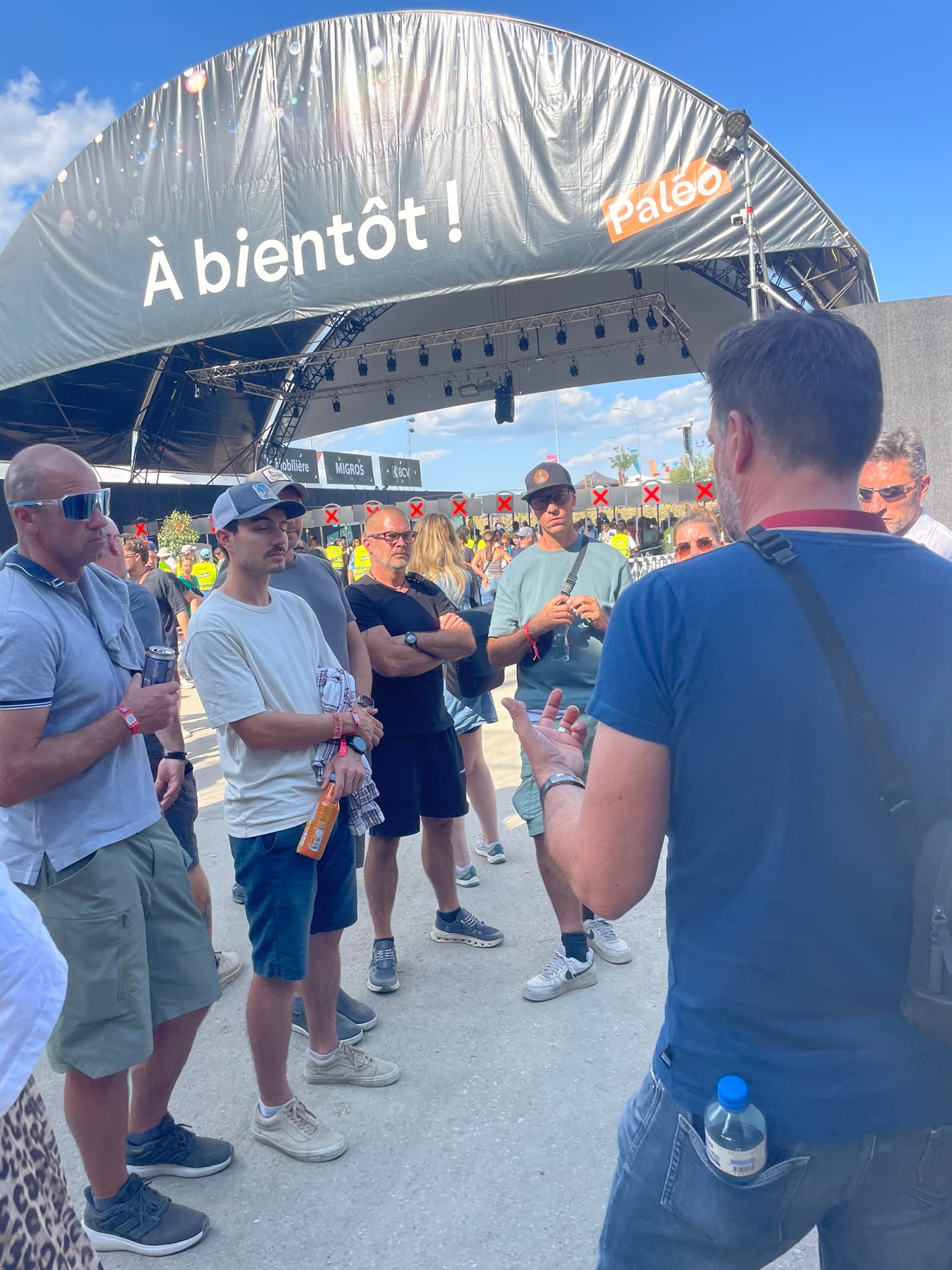
8:30 PM. I leave Pascal as the notes of Morcheeba’s concert rise into the Vaudois night. After that will be Theodora, a new teen idol who will require the activation of a special safety plan for children that evening. Security team volunteers will indeed be present in front of the main stage to prevent and explain the risks inherent in crowds and concerts to the less experienced.
During that same interview in 2014, it was Sir Elton John who mesmerized the crowd. All these stars, all these different audiences, yet always so much communion and magic. My discussions with Pascal now allow me to understand why: the true feat of Paléo-style Risk Management is not having eliminated risk, but having created a space of trust solid enough for 50,000 people to, every evening, afford the luxury of carefree enjoyment.