








AI and the future of work: what the human must preserve
Artificial intelligence is transforming our businesses at an unprecedented speed. More than a question of technology, it’s a human challenge that is having a greater impact on corporate culture than we might think. Here’s a look back at the key lessons from our November 13 event “When humans boost AI, the future of work lights up”, in partnership with HR Today.
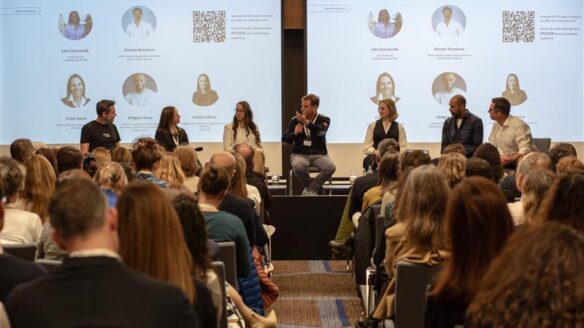
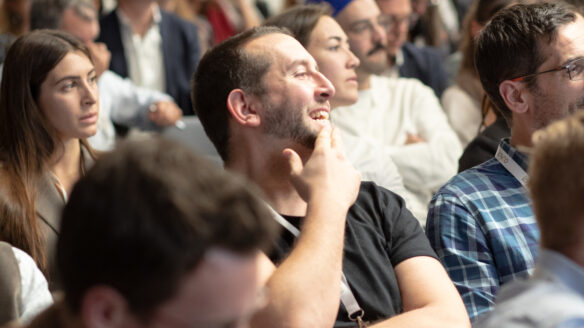
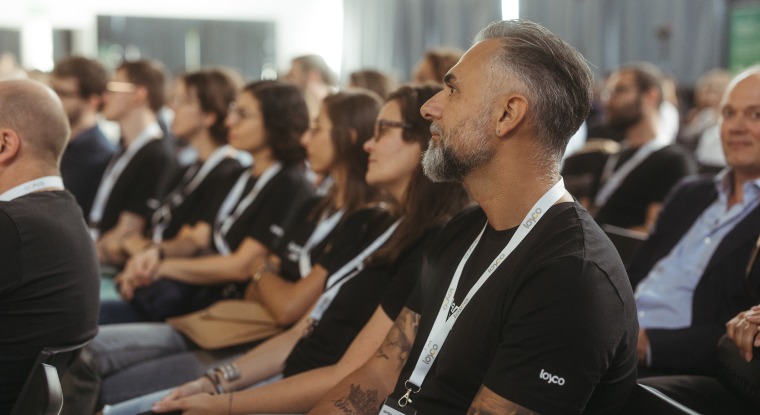
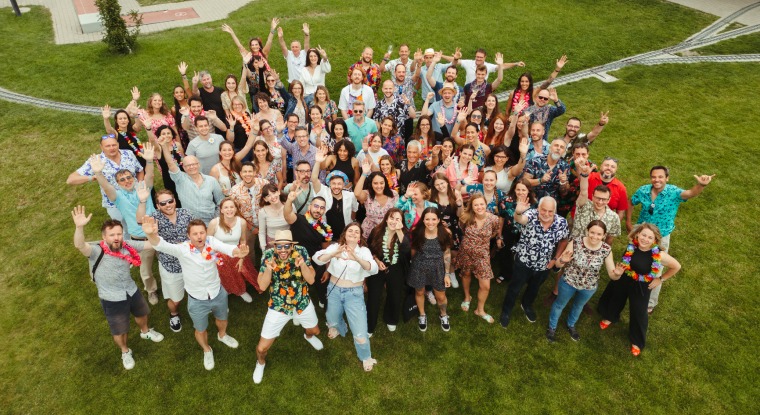
We were 230 people gathered that day at the Royal Savoy to discuss the impact of the AI revolution on the world of work. But this time, with new perspectives. One of reason rather than urgency, of human capabilities rather than machine skills. In short, a necessary step back in the face of a transformation that is invading every aspect of our lives and generating as much enthusiasm as concern.
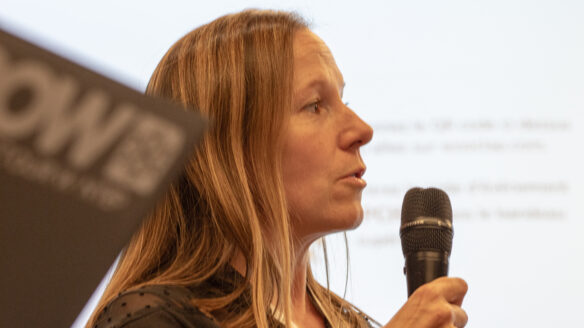
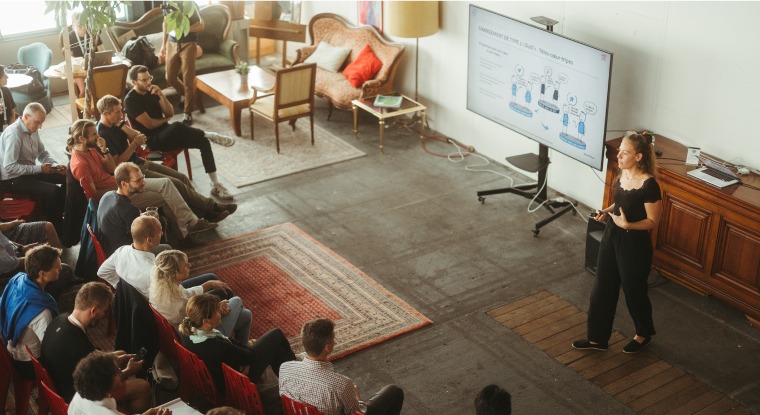
Three speakers provided complementary insights: Gregory Pouy, Justine Dima and Christophe Barman.
Gregory Pouy: Alarmist rhetoric and sociological consequences
Gregory Pouy invited us to take a step back from the alarmist rhetoric surrounding AI, realizing that this is often driven by AI company founders seeking to convince investors of the future and value of their organizations. In his view, the issue is not so much the disappearance of jobs as the transformation of tasks: around 10% of professions could be heavily impacted, while 50% will see 50% of their tasks automated. The crucial question is how to use the time saved.
He also warned against the risk of “deskilling”, i.e. the loss of skills generated by the systematic use of AI. Indeed, true to their “lazy” nature, humans will naturally tend to use AI to work less and put in less effort.
Beyond the technical aspects, he emphasized the psychological and sociological consequences of the mass adoption of AI: fragmentation of the collective, loss of recognition and generational division. To counter this, he recommends developing four essential human pillars: connective intelligence, emotional intelligence, deep creative intelligence and social intelligence.
Justine Dima: Complementarity of action areas
Justine Dima focused on the obsolescence rate of skills: their lifespan has dropped from 30 years to less than 5 years. She presented the complementarity between human and machine, distinguishing between activities that must remain human (creating, judging, leading, empathy) and those that fall within the remit of AI (massive data processing, prediction). She identified three spheres of key skills that remain intrinsically human: cognitive and reflexive (critical thinking, curiosity, digital literacy), social and relational (communication, collaboration, leadership) and self-regulatory (resilience, adaptability). Aligned with Gregory Pouy’s intervention, she also insisted on the “paradox of effort” to face up to the risk of “deskilling”: the more technology simplifies, the more intellectual effort needs to be cultivated. To accompany this change, she recommends creating a flexible learning environment, allocating time to training and anticipating weak signals.
Christophe Barman: Transformation case study
Christophe Barman brought the perspective of his SME faced with the automation of administrative tasks, estimating that 50% could be achieved by AI within two years. For Loyco, transformation is above all cultural: it involves revisiting the company’s raison d’être and co-constructing it with its employees. The company relies on forward-looking and operational innovation, defining new roles and bridging skills gaps through tailor-made training.
He illustrated this approach with the case of the Healthcare team, whose administrative professions are evolving towards functions more closely linked to corporate health management. This transformation requires the development of human skills such as psychology, which are essential to customer support. This means acquiring both new skills and soft skills adapted to these new professions. To achieve this, Loyco practices “reskilling balance”, reinvesting the hours saved by AI in training.
For Christophe Barman, it is the strength of humanity and values that will remain the foundation of customer confidence in the organization throughout this transformation. So we must continue to cultivate them.
The round table: Corporate culture and psychological safety
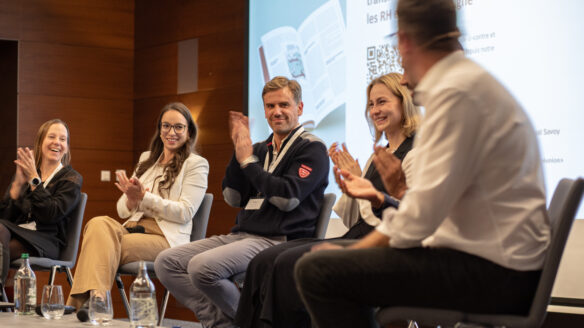
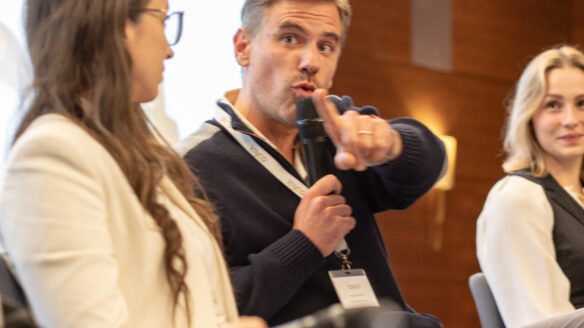
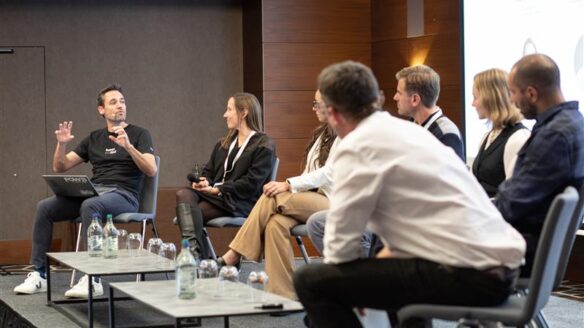
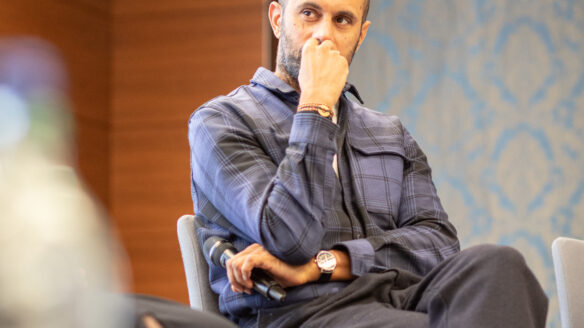
Florent Bondoux, Chloé Kessi and Léa Coucourde then joined our speakers around the table. Their exchanges then extended the reflection on corporate culture and psychological safety. In the face of AI-related fears, the speakers stressed the importance of naming the issues, building a culture based on trust, and allowing experimentation by cultivating the right to make mistakes. Best practices include learning through “quick wins”, closeness to the customer and setting up ambassador networks to spread upskilling and AI-related best practices. The role of HR is considered central: managing risks, facilitating the employee experience and integrating AI with a clear vision and assumed ethics. The value lies not in the tool, but in reimagining processes.
The final word: strengthen what makes us unique
This event revealed the scale of the industrial and cognitive revolution driven by AI, as well as the accelerating obsolescence of skills it entails. More than jobs, it’s tasks that are being transformed, forcing us to reinforce what makes us unique: critical thinking, creativity, empathy and collaboration. To succeed, organizations need to focus on continuous training, preserve the collective and guarantee psychological security. The future belongs to companies that place people and their values at the heart of their strategy.
To find out more
White paper – AI and organizational transformation: HR on the front line